• Home
  • Who
    • #
    • About Us
      • Who We Are
      • Meet the Partners
      • Become A BRCA Partner
      • Join Our Email List
      • Our Green Pages Directory
  • What
    • #
    • Mission, Vision, and Goals
      • Stewardship Principles
      • Issues
      • Work Groups
      • Events
  • Where
    • #
    • Focus Area
      • Focus Area Map
      • Interactive Story Map
  • News
    • #
    • News
      • Events Calendar
      • BRCA News
      • Sign up for eNews
  • Resources
    • Video Library
    • Webinars and Presentations
    • Maps
    • All Resources
info@blueridgeconservation.org
Events
Blue Ridge Conservation AllianceBlue Ridge Conservation Alliance
  • Home
  • Who
    • OUR PARTNERS represent the most active conservation groups in the upper Shenandoah Valley
    • About Us
      • Who We Are
      • Meet the Partners
      • Become A BRCA Partner
      • Join Our Email List
      • Our Green Pages Directory
  • What
    • OUR MISSION is to preserve and protect the natural resources of the Blue Ridge
    • Mission, Vision, and Goals
      • Stewardship Principles
      • Issues
      • Work Groups
      • Events
  • Where
    • OUR FOCUS is the highly-threatened region from Shenandoah National Park to the Potomac River
    • Focus Area
      • Focus Area Map
      • Interactive Story Map
  • News
    • NEWS & UPDATES from our alliance and our partners.
    • News
      • Events Calendar
      • BRCA News
      • Sign up for eNews
  • Resources
    • Video Library
    • Webinars and Presentations
    • Maps
    • All Resources

News

Longevity, Mortality and Enemies for Bald Eagles

Alliance Partners, Loudoun Wildlife Conservancy |

Once an eaglet fledges and leaves the nest area for good, it starts its journey in the wild as a juvenile.  Unfortunately, there is a 50 to 60 percent mortality rate in the first year as the juvenile learns to become independent, find its own food, and face dangers never seen in the nest.  If the juvenile makes it through the first year, mortality rates drop significantly each year thereafter.
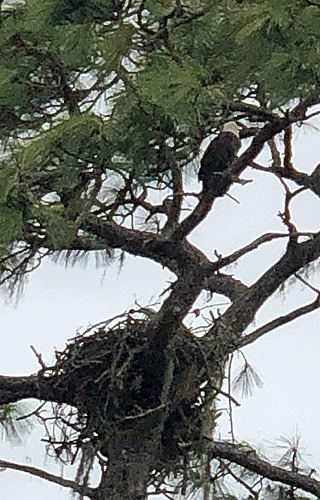
Bald Eagle above nestEagles under human care can live for three to 50 years, but in the wild, the typical lifespan is 15 to 20 years. An eaglet faces some of the earliest mortality dangers in the nest, including congenital deformities, predation, starvation, failure to thrive and siblicide.  Congenital deformities may mean that the eaglet does not have the ability to hunt properly, which can lead to early death.  There have also been instances of predators taking and harming or killing an eaglet from the nest such as raccoons, Great Horned Owls, or other large raptors.  Failure to thrive happens when there isn’t a good food source, often affecting the youngest in a clutch, or even the older sibling killing the younger through aggression and competitiveness over food.  It has often been stated that the reason Bald Eagles lay multiple eggs in a clutch is to ensure that at least one eaglet survives to carry forward the species.

Poisoning is a real threat to eagles, and often comes through food sources such as rats and other rodents where homeowners/landowners have used pesticides.  Eagles can also be poisoned from lead that they ingest from carrion that is shot by hunters with a lead bullet and left.  Eagles all too often show up in rehab facilities with pellets and lead from being shot, not just ingesting the lead.  They can face electrocution going into power lines or damage from wind turbines and even strikes with airplanes.  Parasites are another danger to eagles in the wild and can lead to death as well as sickness.

Eagles face many diseases in the wild, a few of the more well-known ones being West Nile Virus, avian flu and pox viruses, the latter causing  blindness and major beak and talon deformities.  Accidents on, or to the side of, roadways are another mortality cause, especially in younger eagles who live on carrion until they learn to hunt at about age three.

Eagles are also injured or killed in territorial fights, especially as the numbers of  Bald Eagles has rebounded, and there is more density in nest areas with eagles migrating through, looking for nesting sites, and attempting to find mates.

Some of the more common enemies of Bald Eagles include humans, Great Horned Owls, other eagles and raptors, and raccoons and crows for Bald Eagle young and eggs.

Reference:
Leslie Brown and Dean Amadon, Eagles, Hawks & Falcons of the World

2

You also might be interested in

Inspiring Conservation

Inspiring Conservation

Jul 3, 2024

PEC’s annual meeting inspires many in Charlottesville. The post Inspiring[...]

Remembering Caroline Kuhfahl

Remembering Caroline Kuhfahl

Oct 29, 2022

Volume 27 Issue 4, Fall 2022 Who knows how much[...]

6. Clark’s Run WWTF Discharge Pipe

6. Clark’s Run WWTF Discharge Pipe

Oct 5, 2022

Measured E. coli concentrations in the final effluent from the[...]

Alliance Partners

  • Appalachian Trail Conservancy
  • Blue Ridge Watershed Coalition
  • Changing Landscapes Initiative
  • Friends of the Blue Ridge Mountains
  • Goose Creek Association
  • Friends of the Shenandoah River
  • Land Trust of the Eastern Panhandle
  • Land Trust of Virginia
  • Loudoun Wildlife Conservancy
  • Piedmont Environmental Council
  • Potomac Appalachian Trail Club
  • The Downstream Project
  • Virginia Working Landscapes

Loudoun Wildlife Conservancy

  • Data Centers in the Town of Orange? Protecting Our Small-Town Character The Piedmont Environmental Council (PEC) is working closely with residents...
    Read more
  • Piedmont Mobility Alliance Convenes Summit to Advocate for Better Community Access to the Great Outdoors The Piedmont Mobility Alliance will convene the sixth annual Active...
    Read more
  • An Electric Super-Highway Through the Piedmont Joining the list of new energy and infrastructure proposals across...
    Read more
  • An Electric Super-Highway Through the Piedmont Joining the list of new energy and infrastructure proposals across...
    Read more
  • 2026 Work Days at JK Black Oak Wildlife Sanctuary Before getting started, Gerco briefs volunteers. Photo by SA Ferguson...
    Read more

Contact Us

We're currently offline. Send us an email and we'll get back to you, asap.

Join Us Today! Learn More

Contact Us

  • (540) 955-6066
  • info@blueridgeconservation.org
BRCA monthly e-Newsletter

E-NEWSLETTER

Our e-Newsletter will keep you in-the-know on regional conservation Action Events and News from our Partner Organizations).

Sign Up

SOCIALIZE

Follow us on social media

© 2026 · Blue Ridge Conservation Alliance • network website powered by The Downstream Project

Prev Next

Press Enter to search · Esc to close